
In This Article
Realism, Shrunk Down
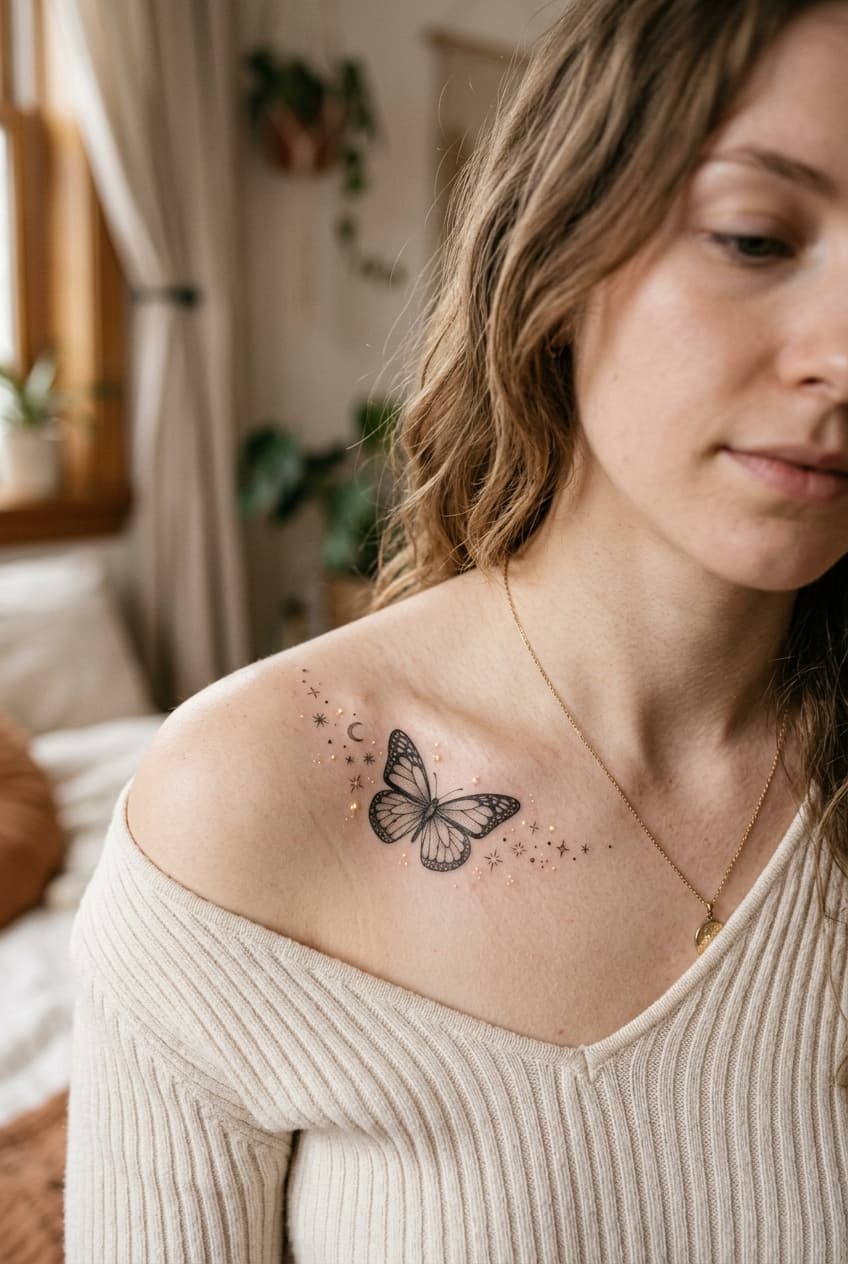
This piece pairs a monarch butterfly rendered with photographic detail alongside a small celestial star cluster — a combination that showcases exactly why micro-realism has become one of the most in-demand fine-detail styles.
How Detail Survives at Small Scale
Micro-realism relies on single-needle work and extremely controlled shading gradients to preserve texture — the individual scale patterns on a butterfly's wing, for example — without the piece blowing out into a solid dark blob as it heals.
Negative space and single-point 'sparkle' highlights are used deliberately around the stars to create the illusion of depth without adding extra ink that could compromise the small scale.
Butterfly and Star Symbolism
Butterflies are widely read as symbols of transformation and personal growth, referencing the metamorphosis from caterpillar to adult. Stars are most often tied to guidance, dreams, and hope — a fitting, lighter counterpoint to the butterfly's theme of change.
Where This Works Best
Because the detail is so fine, this piece needs an artist specifically experienced in micro-realism rather than general fine-line work. We recommend keeping it to areas with minimal stretch or friction — behind the ear, inner wrist, or upper back — to protect the detail long-term.
Frequently Asked Questions
How small can micro-realism go before detail disappears?
For a piece with this much detail, we don't recommend going smaller than about 2 inches across, or the wing and star shading will blur together as it heals.
Does this style require a specialist?
Yes — micro-realism demands a steadier, more controlled needle technique than standard fine-line work, so we always match these requests with an artist experienced specifically in the style.


